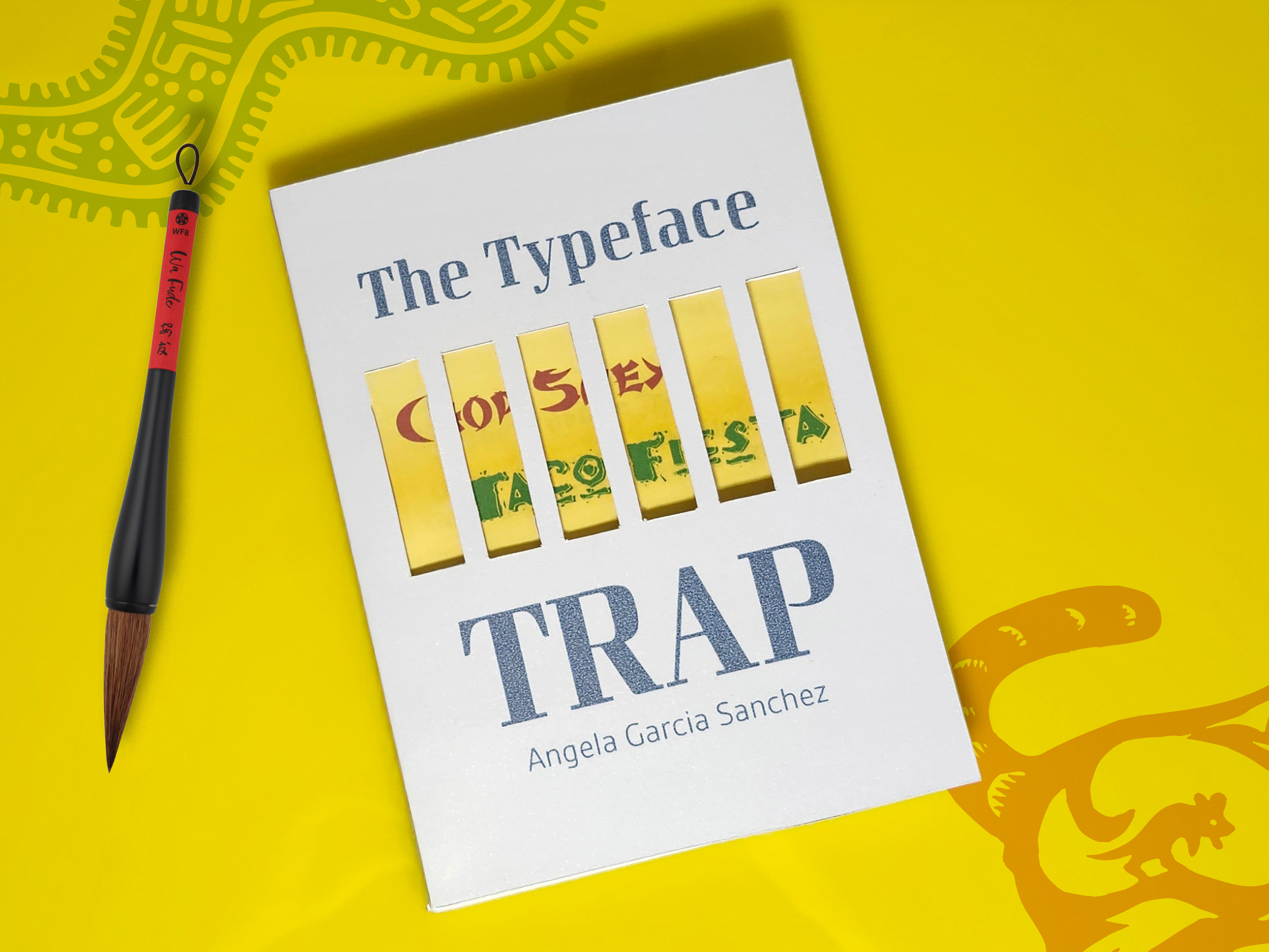
Create a handheld souvenir that represents your hometown’s cultural identity. Through research, sketching, and prototyping guided by Allan Shearer’s Design Thinking Framework, produce a polished mini-monument with supporting illustrations and orthographic drawings.
How can I design a souvenir that authentically represents the cultural heritage of my hometown while engaging tourists in a meaningful, thought-provoking way?
Reserach, Prototyping, Industrial & Graphic Design
Tools: Miro, Adobe Illustrator, Photoshop, Glowforge Laser Cutter, Roland VersaCAMM
Timeline: 5 weeks
────────────
What Hometown Means to Me
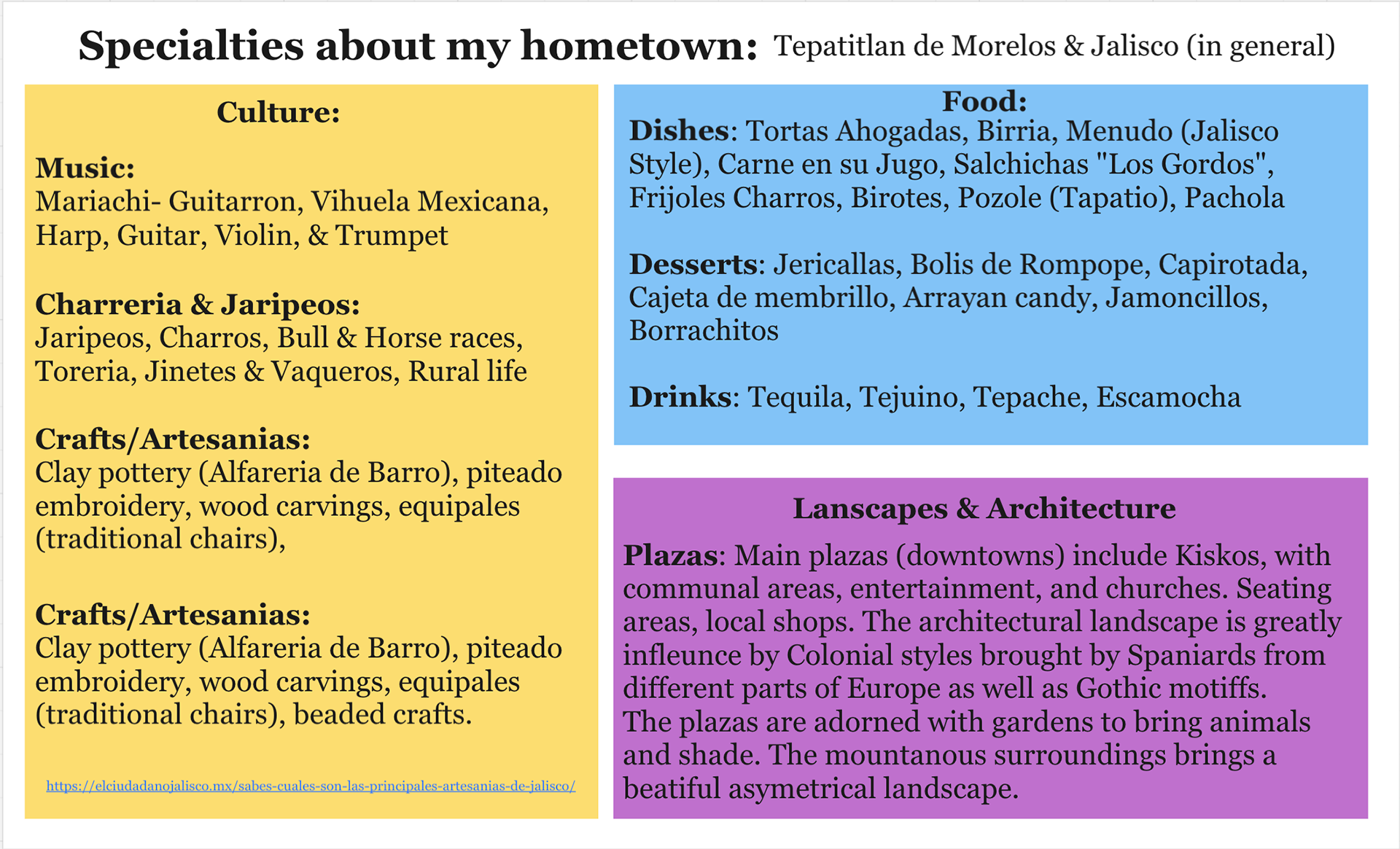
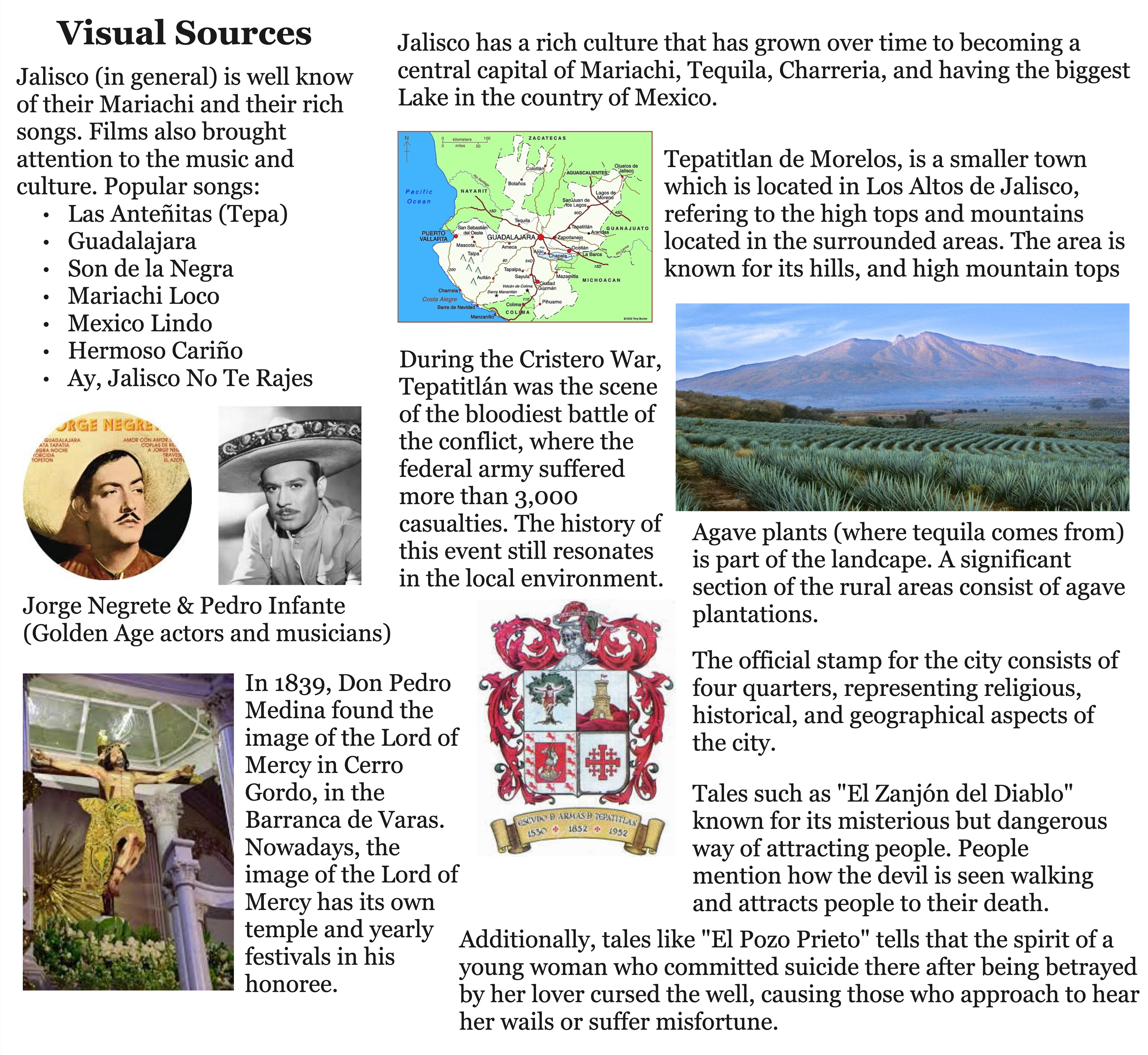
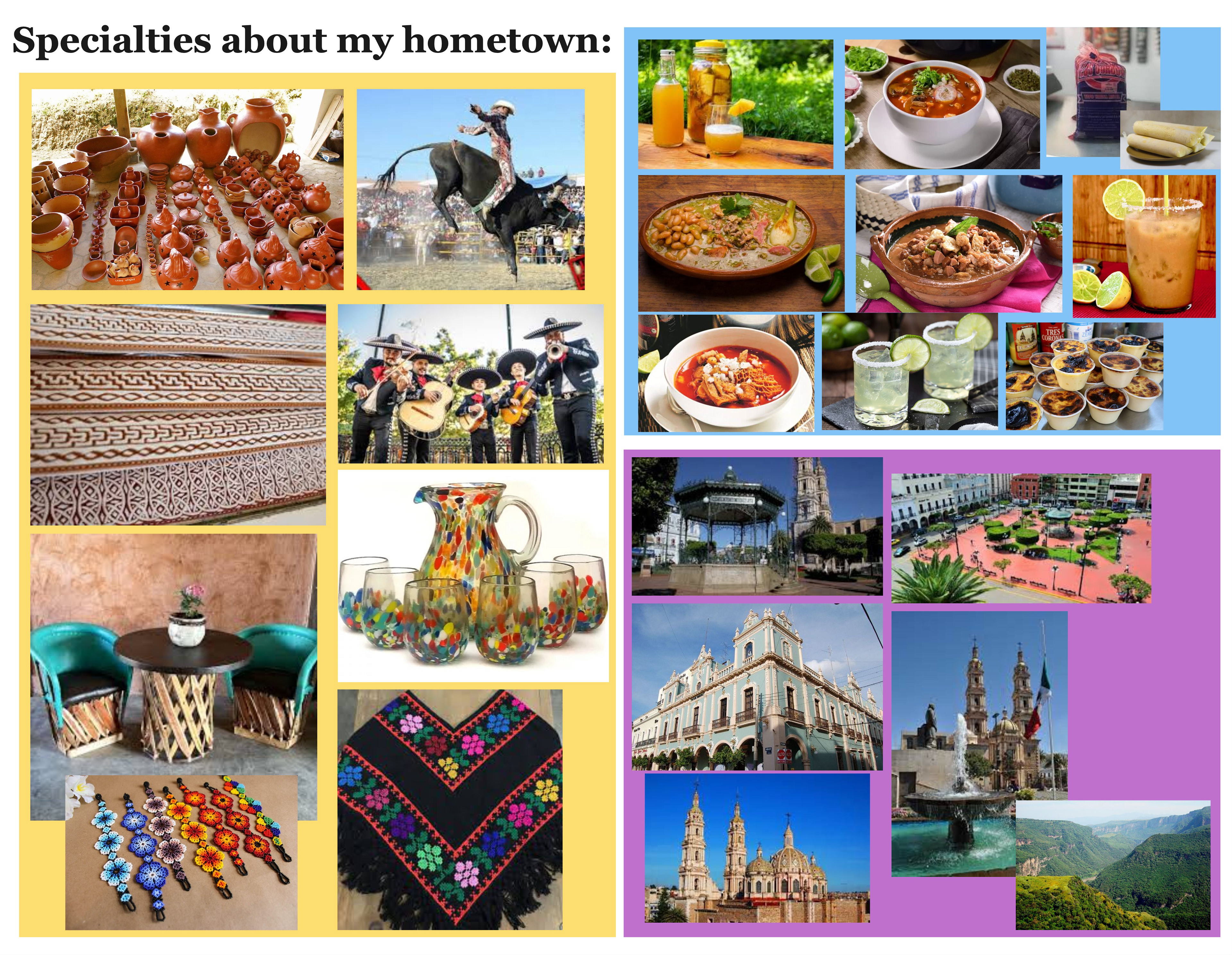
My hometown, Tepatitlán de Morelos, is where I was born and raised, and where my family and cultural roots are grounded. For me, hometown is deeply personal, it shapes my identity, values, and creative perspective. Traditions, religion, rituals, and heritage continue to influence how I see the world. I also recognize that “hometown” can extend beyond geography, it can be a place of ancestry, emotional connection, or cultural belonging. Through research, I identified key elements that define Tepatitlán’s cultural identity and attract visitors, including religion, agriculture, agave production, cuisine, and local traditions.
Perceptions: Vary between locals and visitors. Understanding both positive associations and underlying challenges helped shape the direction of my souvenir. My goal was to highlight cultural pride while thoughtfully acknowledging more complex narratives tied to the region.
Design Thinking Framework
Image of the World: Located in Jalisco, the region is known for strong Catholic traditions, gender roles, agave production, tequila, and rich culinary heritage.
Challenges: Large-scale agave farming limits agricultural diversity and is tied to alcohol consumption issues and machismo culture.
Vision: Create a souvenir that reflects the people, culture, landscape, and beliefs of Tepatitlán.
Objectives: Move beyond stereotypes and highlight deeper cultural meaning.
Forms: Explore postcards, small decor objects, or stationery as tangible reminders of place.
────────────
Ideation
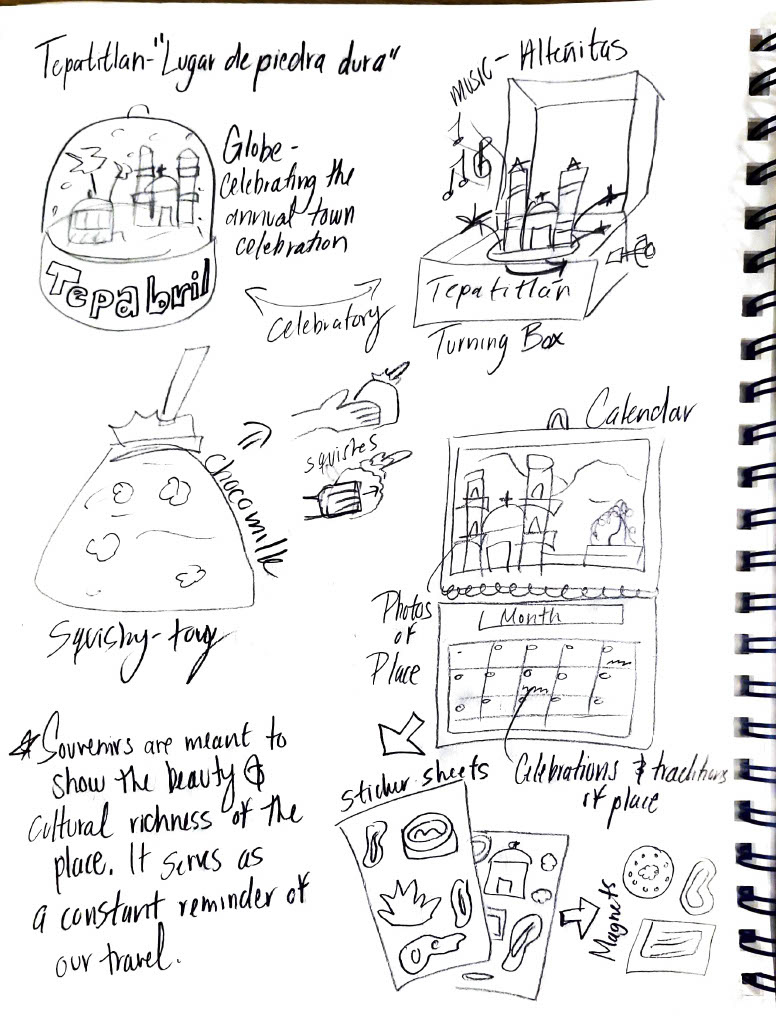
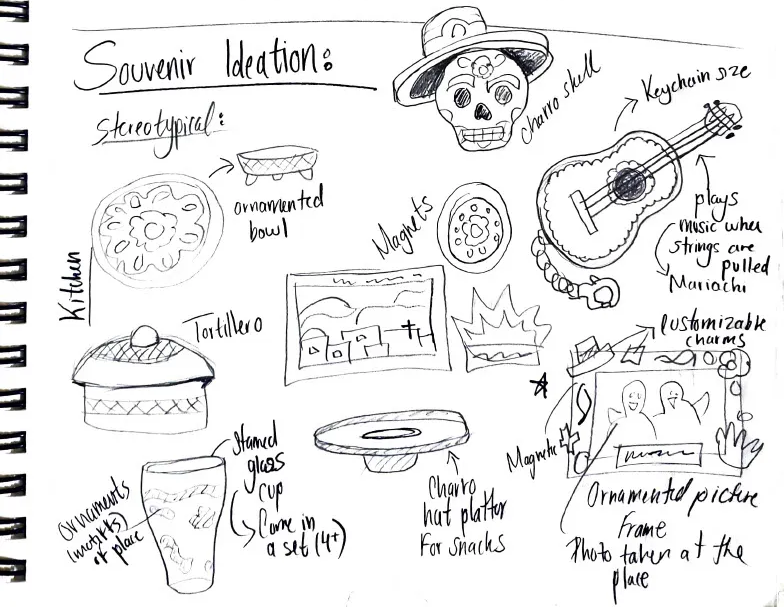
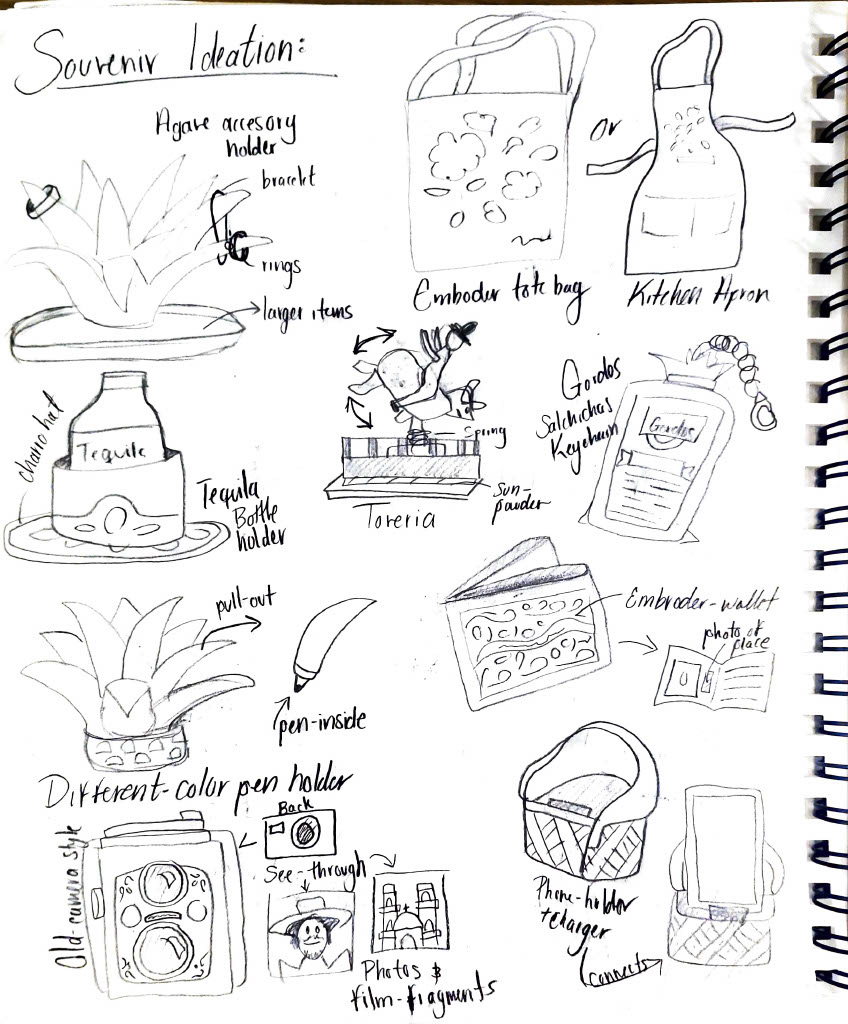
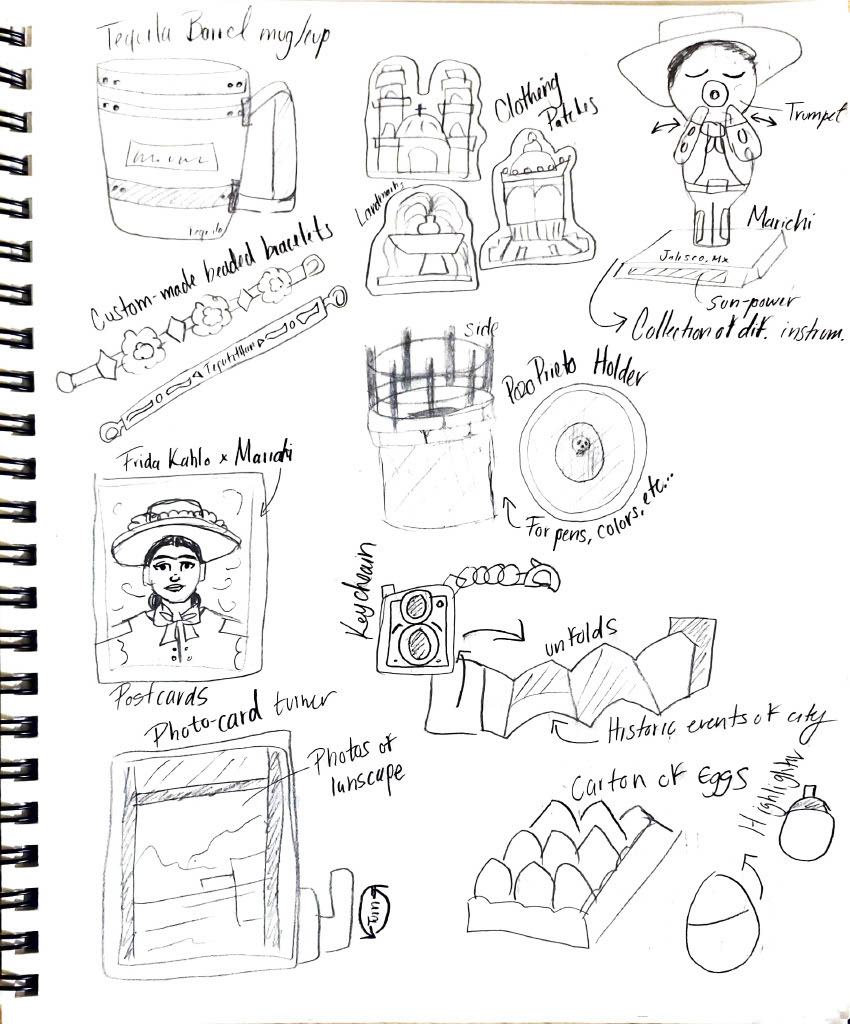
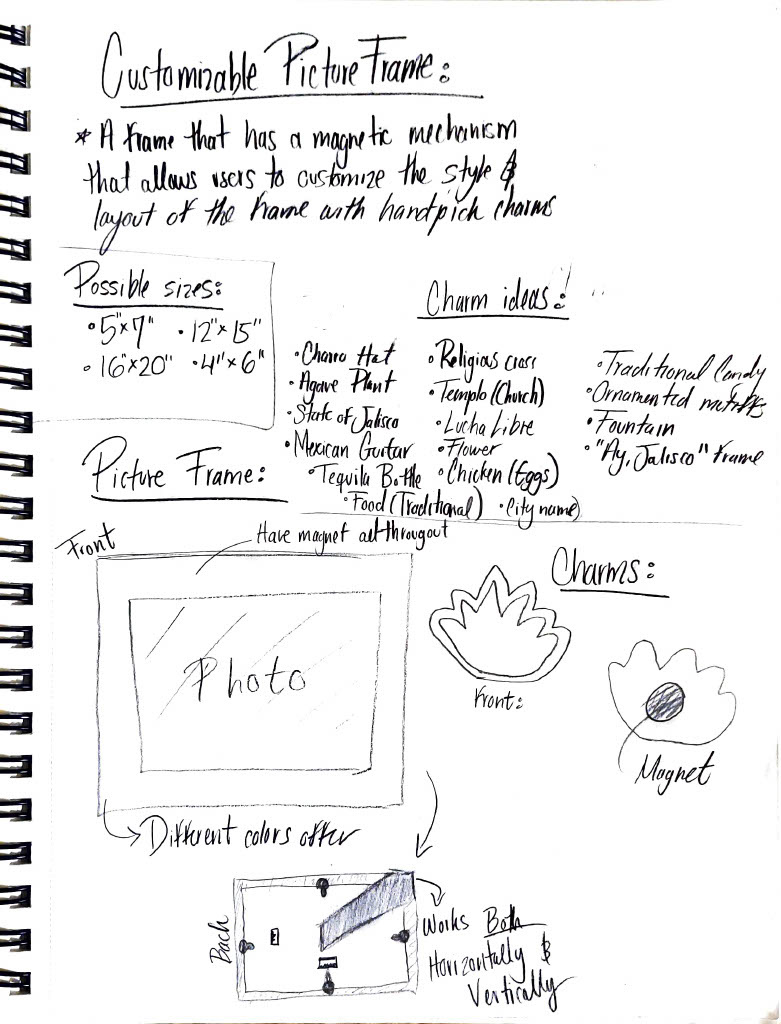
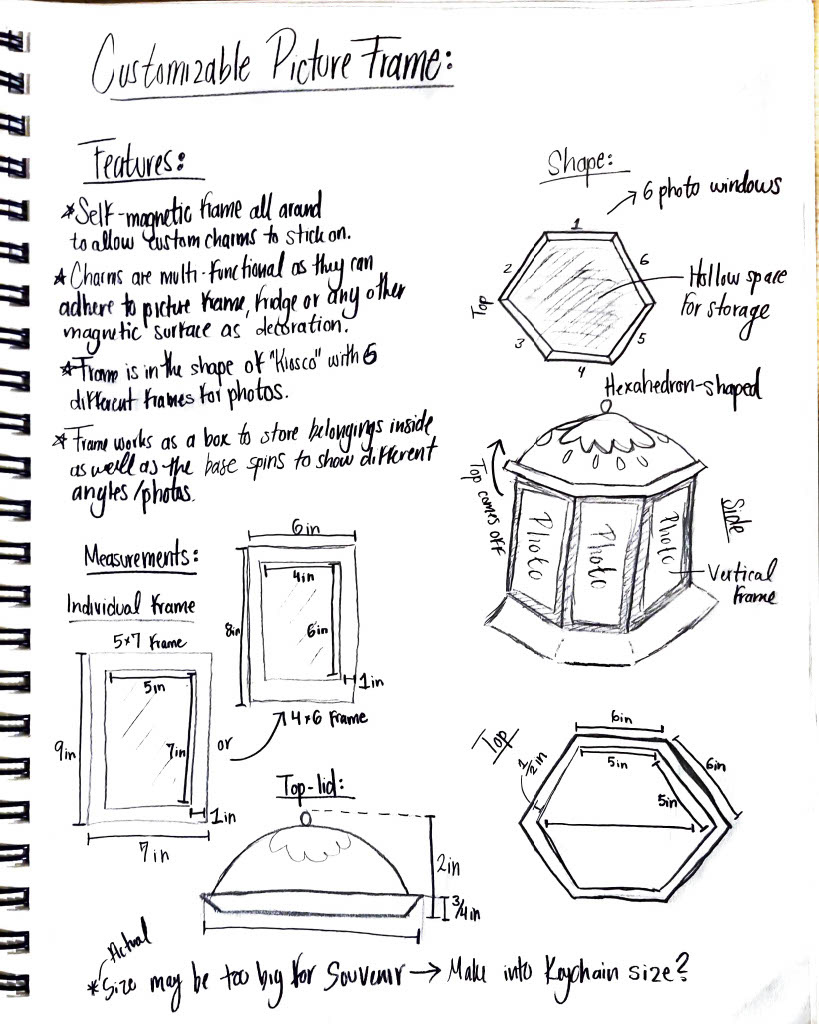
I decided to design a custom picture frame with magnetic charms that users can arrange and stylize according to their preferences. This allowed for preserving the idea of "commemorating good memories" and allowed me to incorporate specific elements of my hometown keeping it both meaningful and personal.
Pivot
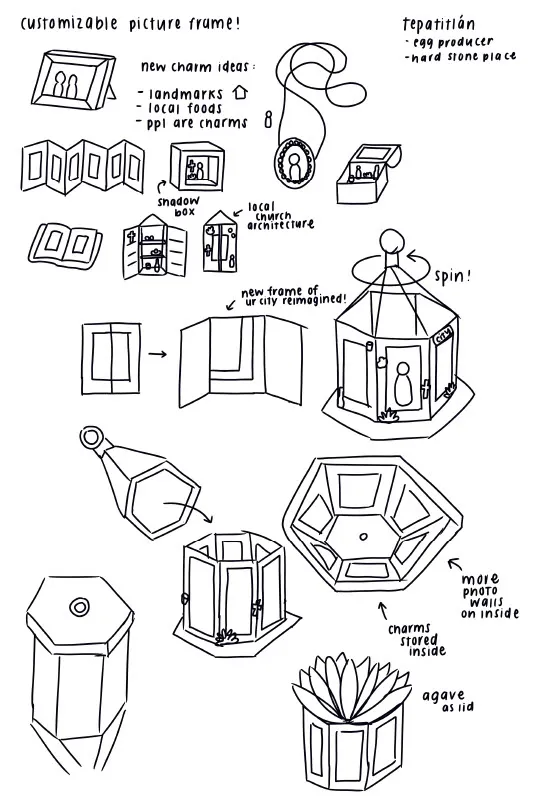
During a feedback session, my classmate helped me re-imagine my idea offering fresh insight for potential re-evaluation. Her feedback allowed me to align my design to a more meaningful and nuanced souvenir, one that would resonate with both the essence of my hometown and the deeper emotional connections I aimed to evoke.
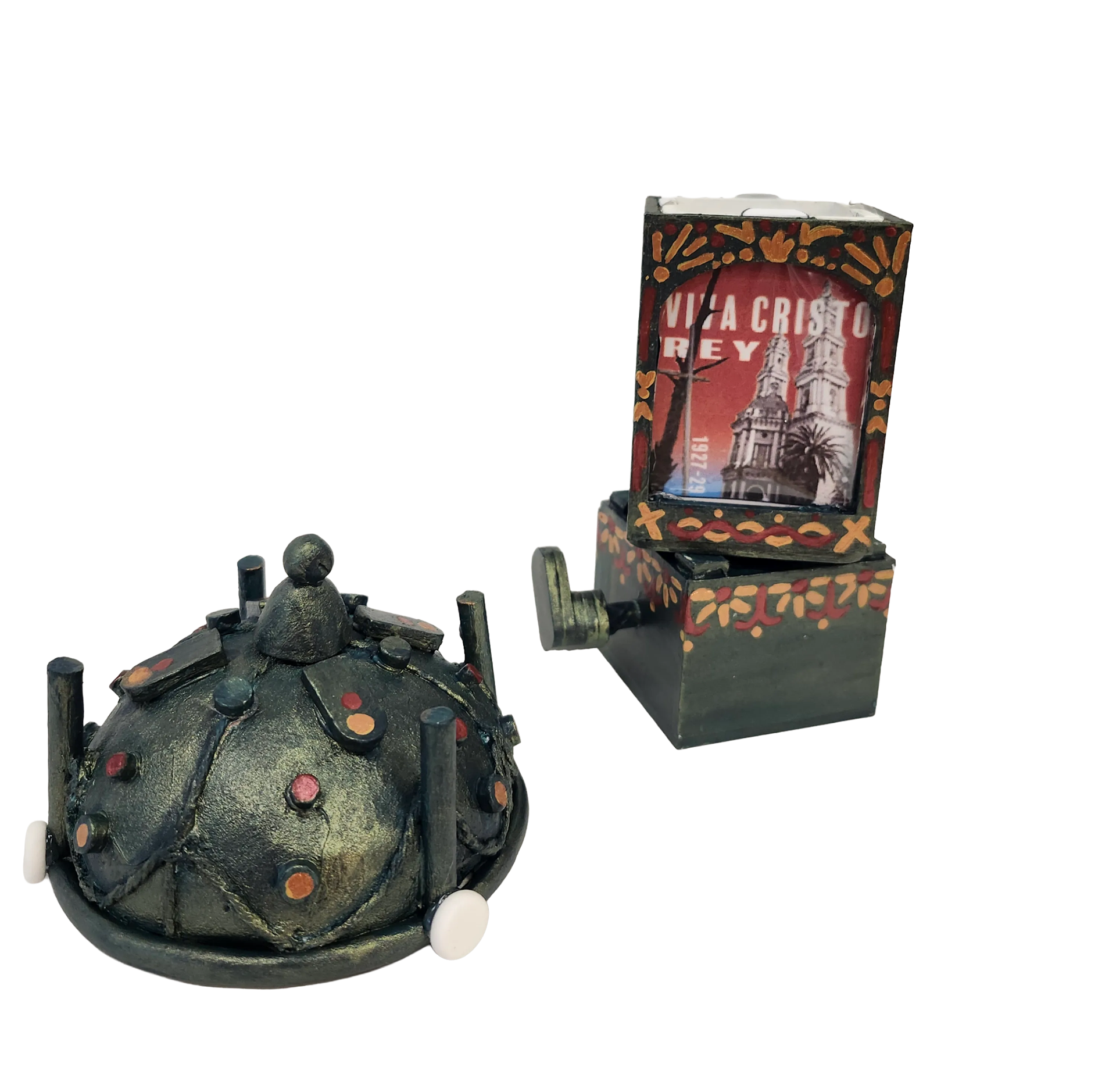
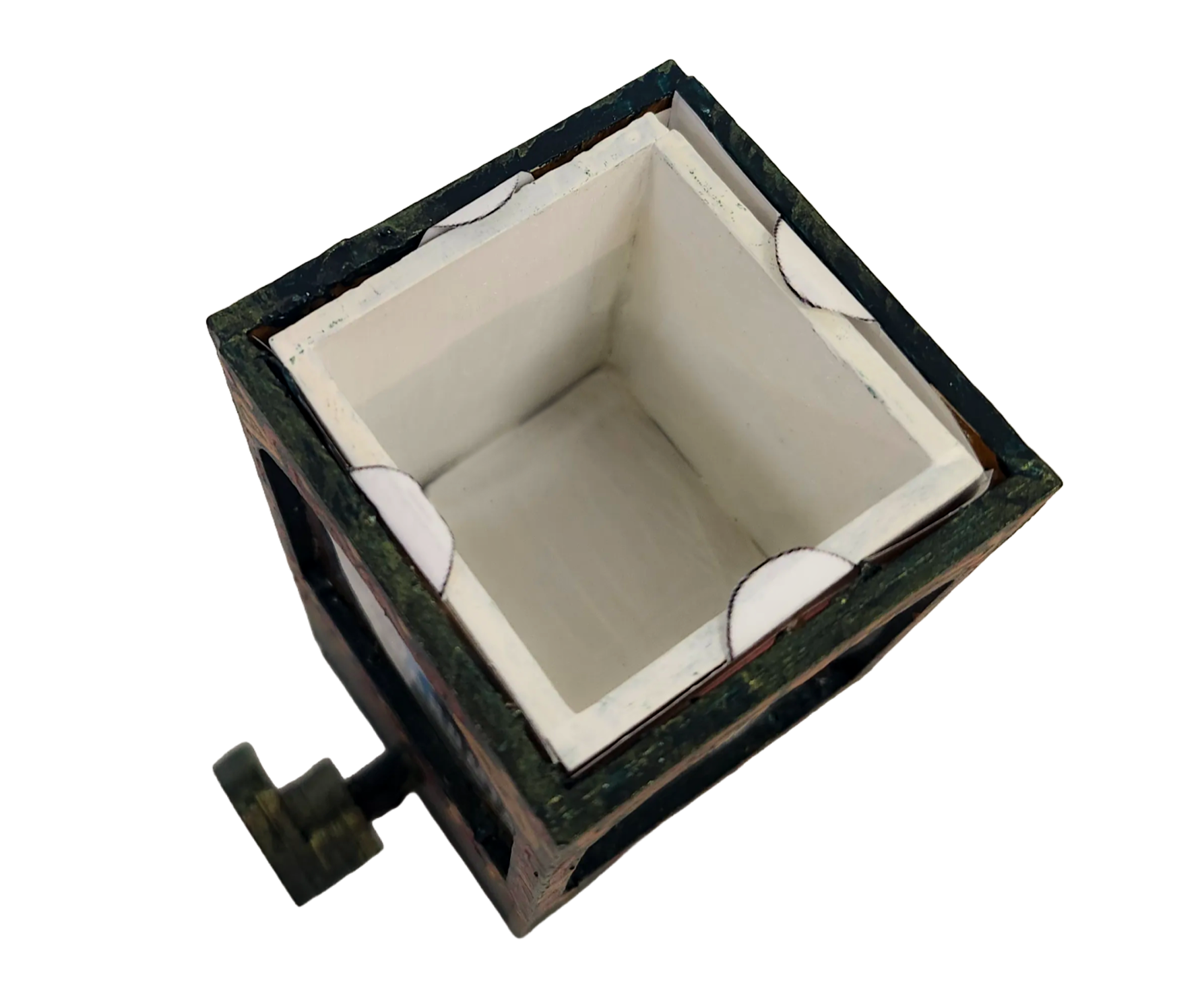
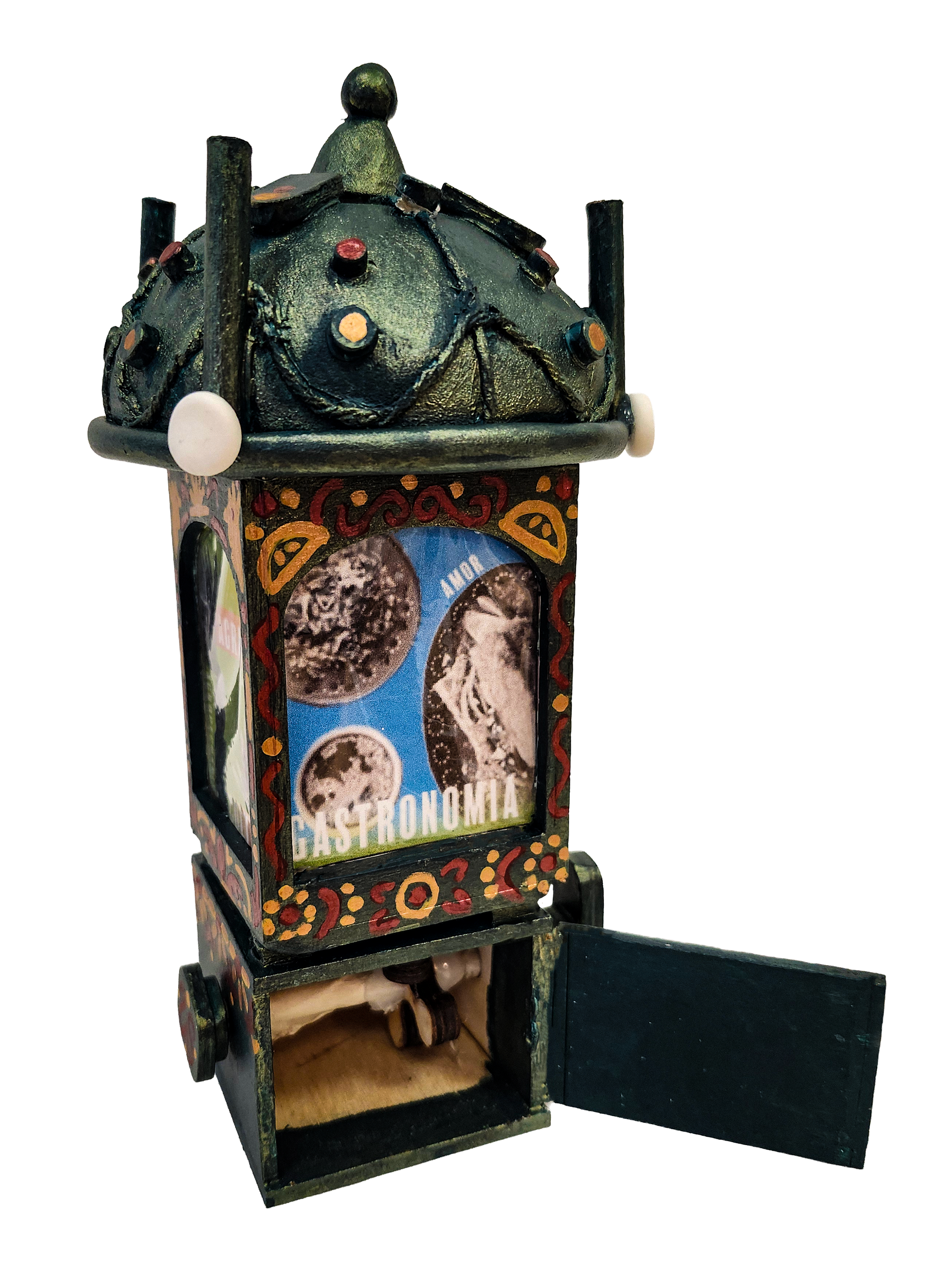
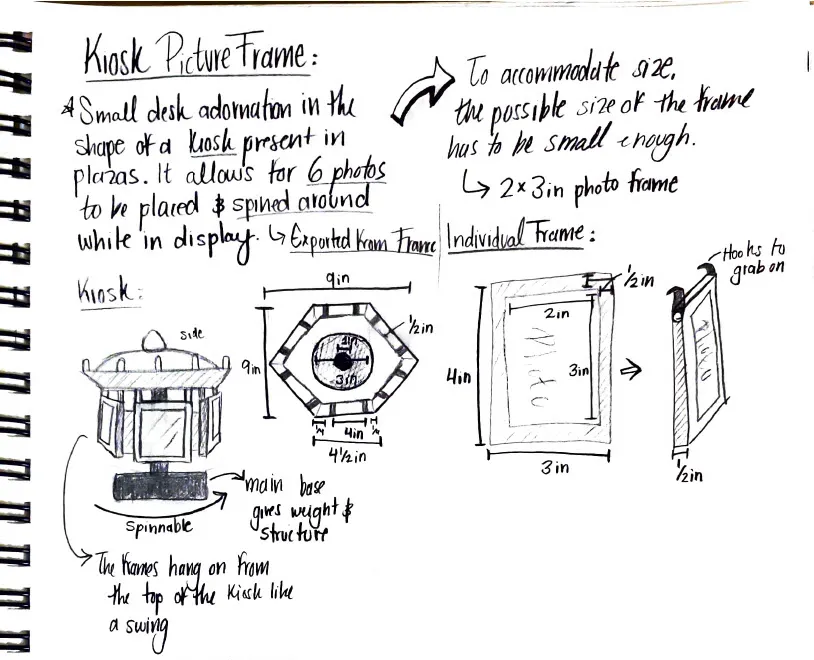
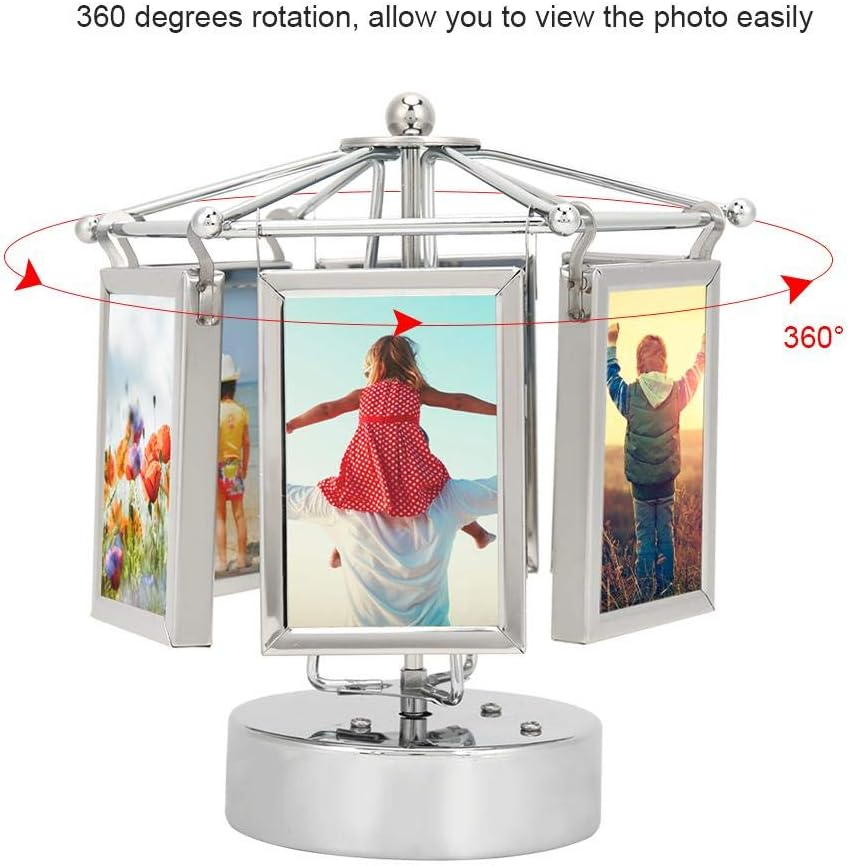
My idea shifted to a spinnable, "kiosk-shaped" picture frame that rotates 360°, allowing users to view photos from all angles. This design offers an interactive, dynamic experience, enabling the display of multiple memories in a single, engaging piece.
Creating Meaning
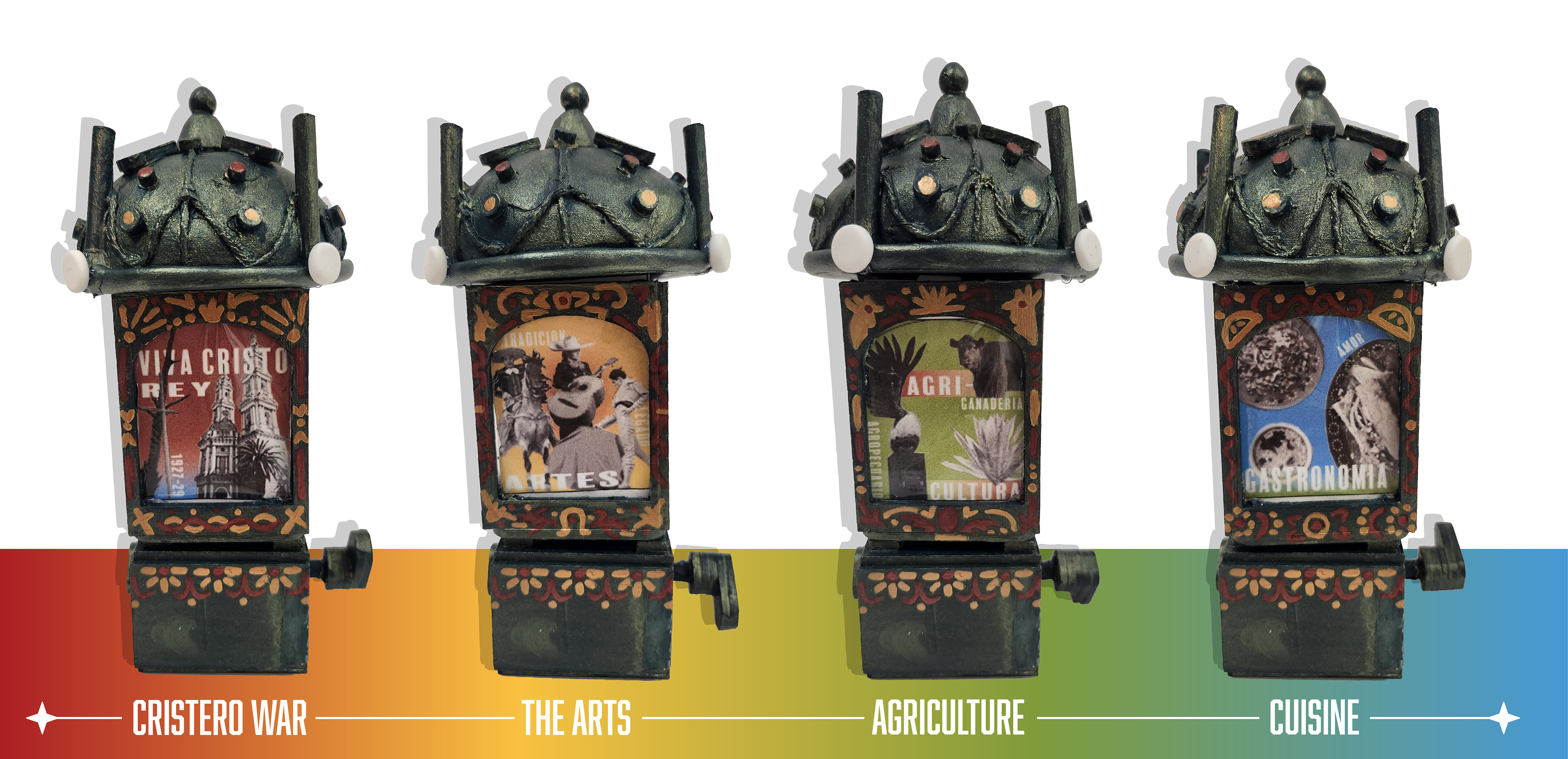
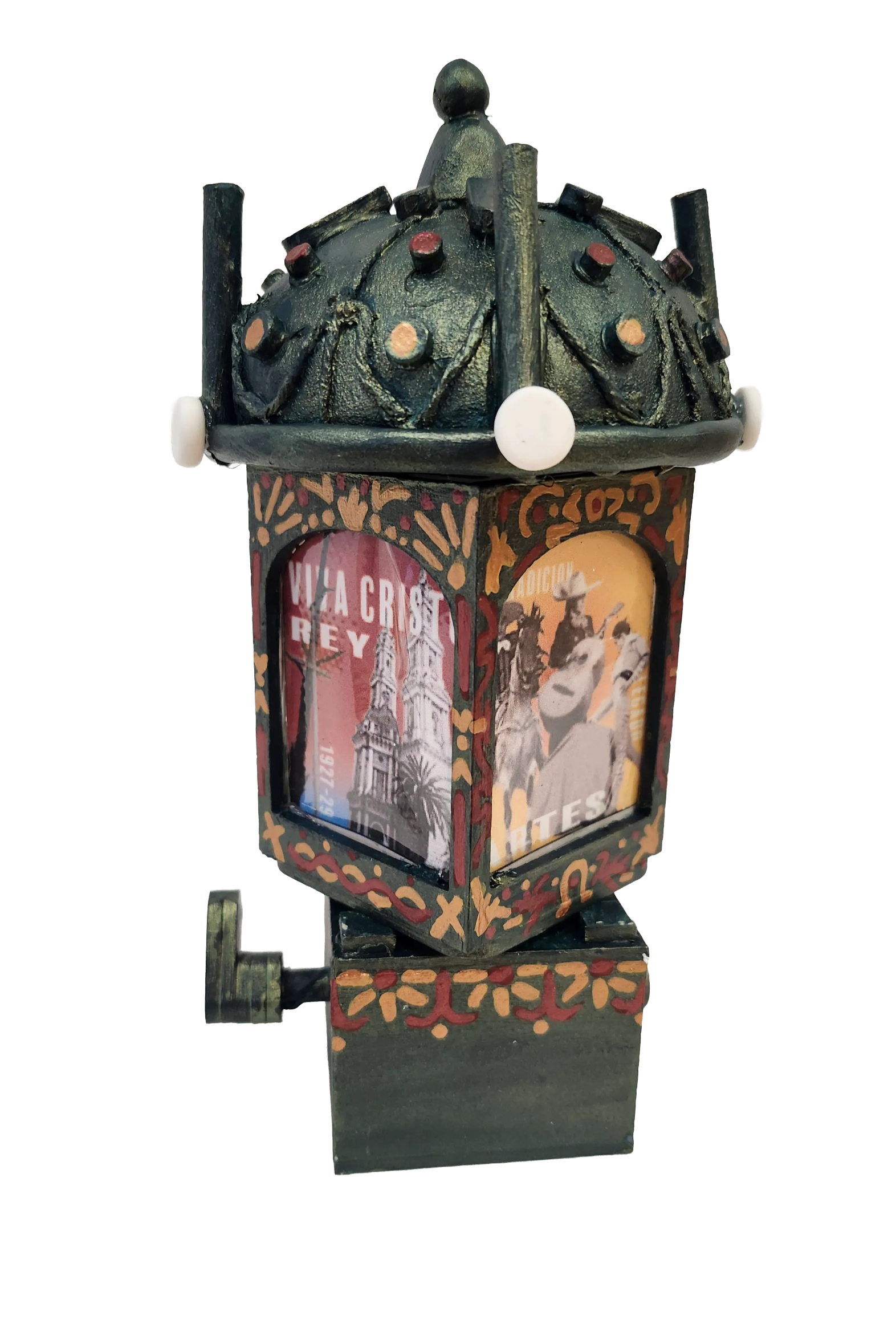
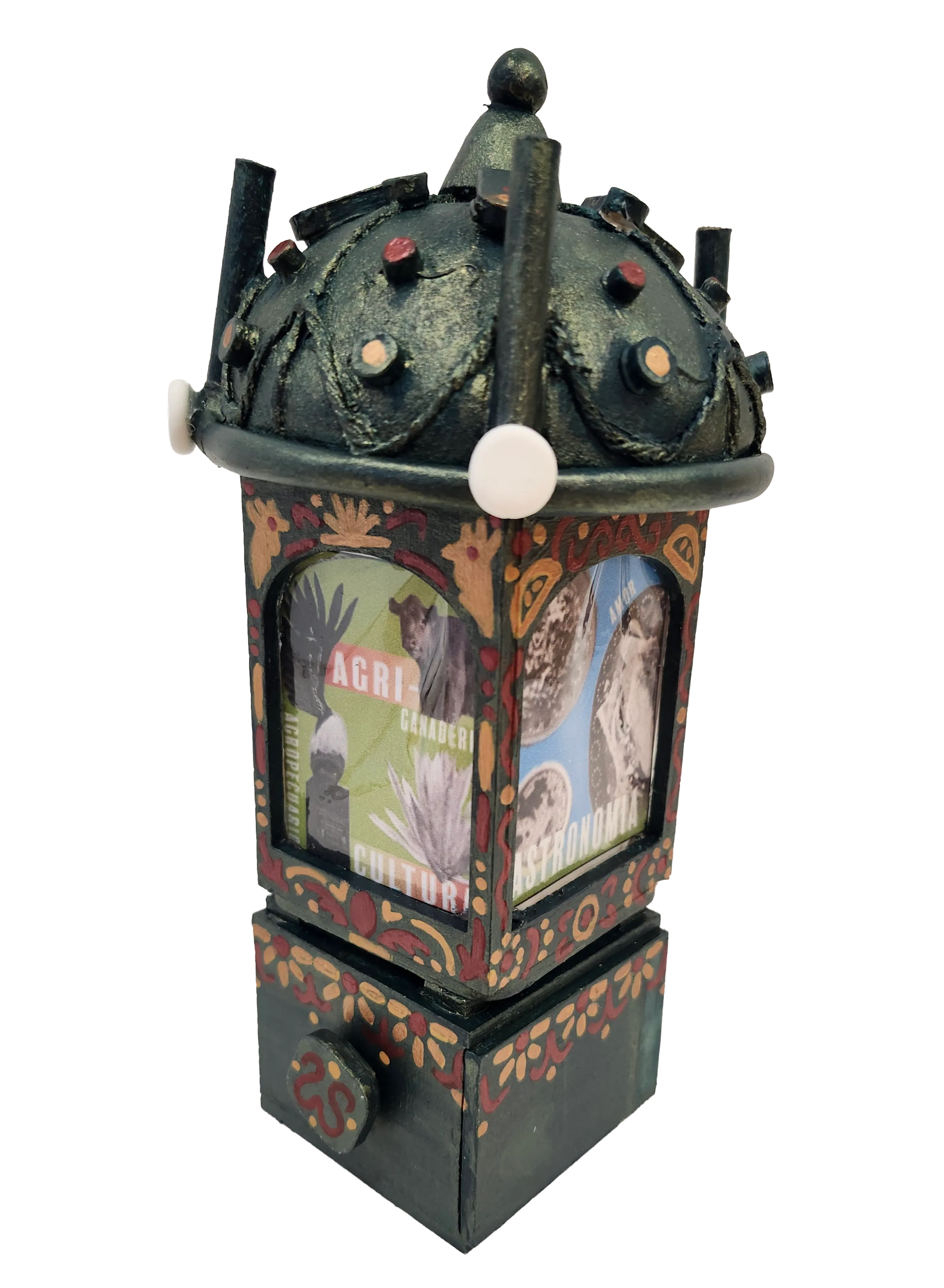
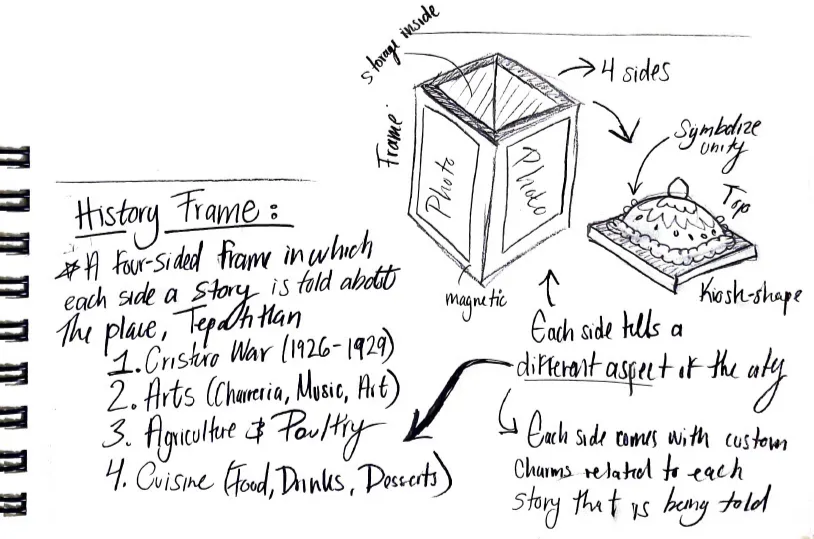
I developed a design composed of four distinct frames, each representing a core pillar of Tepatitlán’s cultural identity. Together, these elements create a layered narrative that reflects the town’s history, traditions, and emotional significance.
Cristero War: Highlights Tepatitlán’s deep Catholic roots and its role in the Cristero War (1926–1929), honoring local martyr San Tranquilino Ubiarco and the town’s enduring religious identity.
The Arts: Celebrates regional traditions such as charrería and mariachi, along with influential cultural figures who connect Tepatitlán to broader Mexican artistic heritage.
Cuisine: Showcases local dishes and traditional beverages rooted in ranching culture and regional ingredients, reflecting the flavors and communal rituals of the town.
Agriculture & Poultry: Recognizes the town’s agricultural strength in Los Altos de Jalisco, known as the “Egg Basket of Mexico,” with farming and agave production central to its economy and identity.
────────────
Prototyping
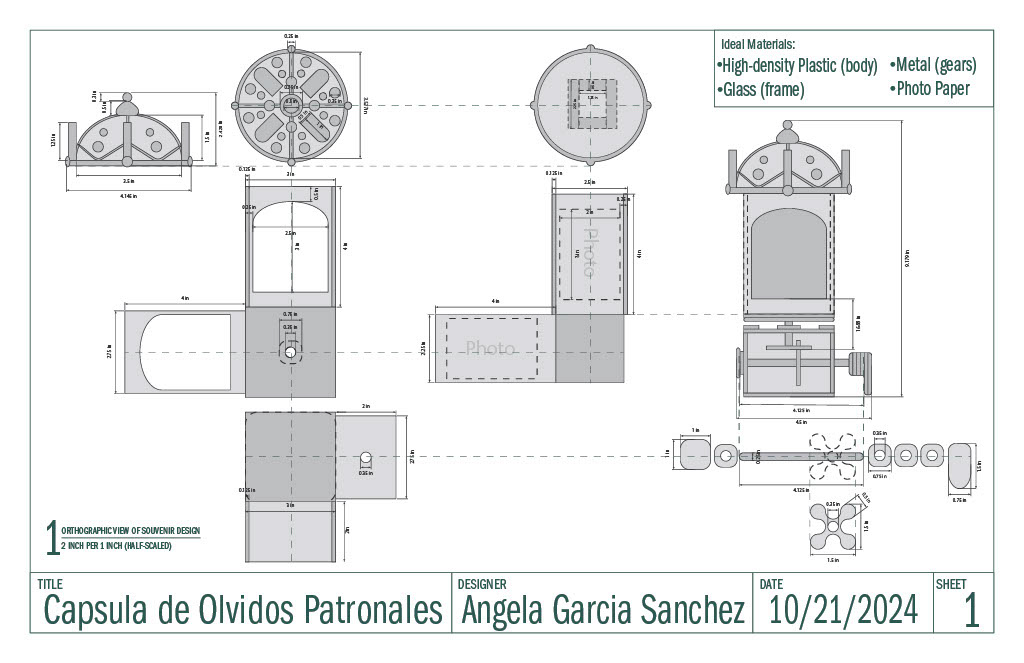
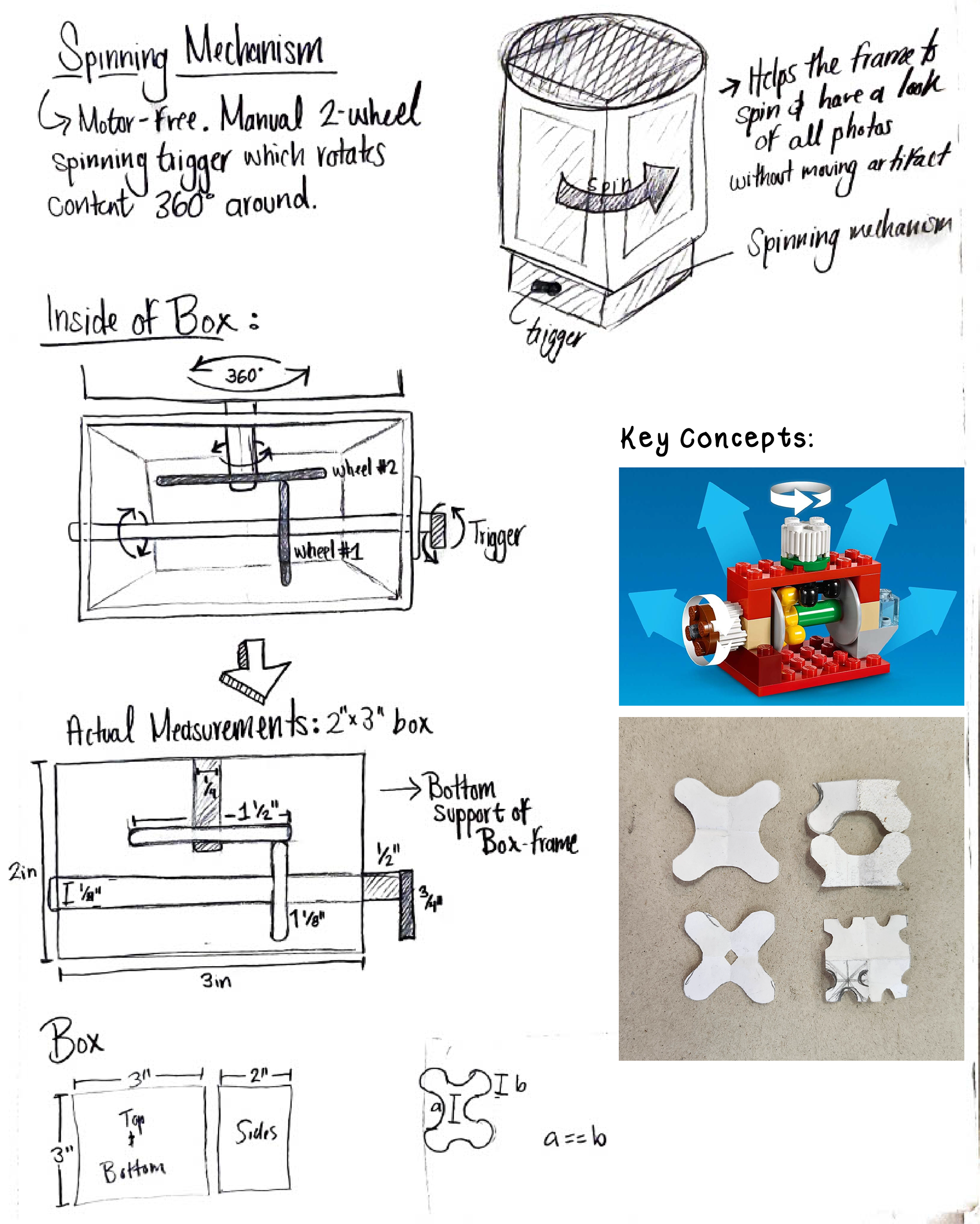
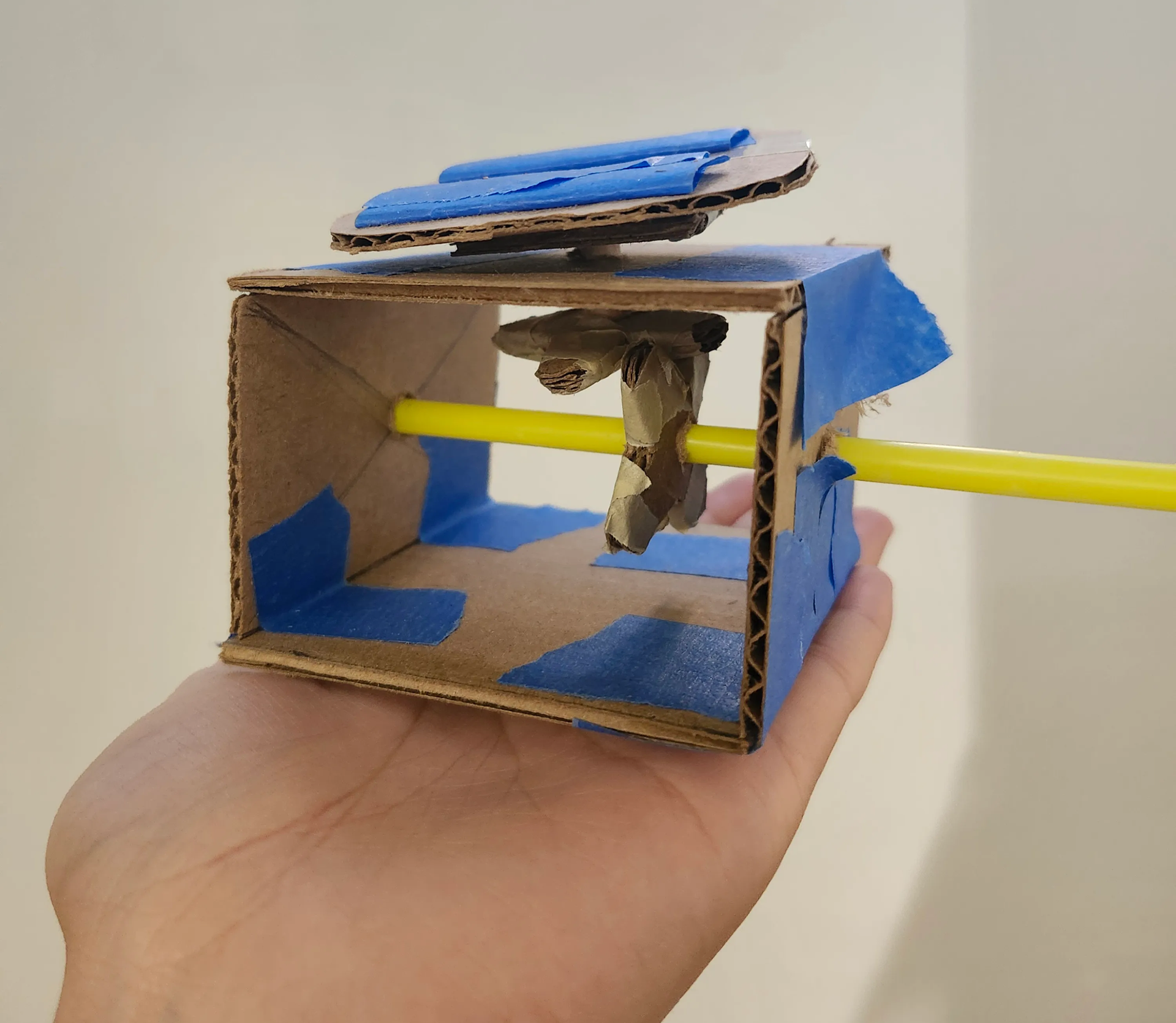
To preserve the spinning mechanism within the rectangular frame, I decided the best approach would be to incorporate an interior mechanism, similar to those found in music boxes, where a handle is turned to rotate the frame 360° around its base. This solution ensures smooth movement while maintaining the compact design.
I explored various methods and shapes to create a functional spinning box by cutting out symmetrical gear shapes, which I then transformed into cardboard prototypes to test the mechanism and ensure it would work as intended.
────────────
The Four Pillars
Each frame represents one of the four cultural pillars of Tepatitlán to form a unified narrative. Hand-painted ornaments on the exterior subtly reference each pillar, embedding personal and cultural meaning into the object itself.
Inside, four photographs highlight these distinct aspects while maintaining a consistent visual language. Although each image tells its own story, their shared tone and composition create cohesion, allowing the frames to function as both individual tributes and a collective reflection of Tepatitlán’s identity.